
Protect your kidney health this World Diabetes Day

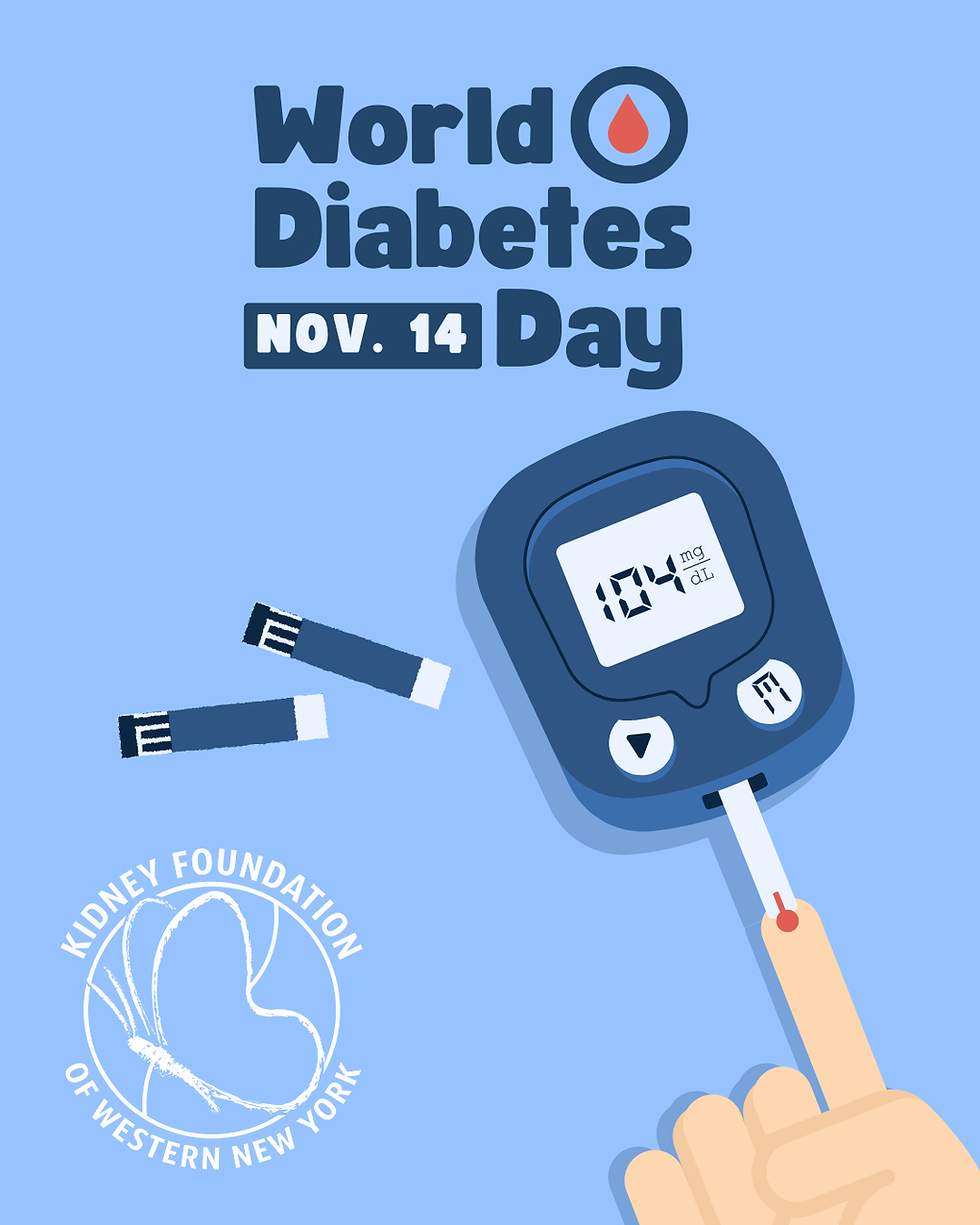
Today is World Diabetes Day, an important reminder that diabetes is the leading cause of kidney disease. About 1 out of 3 adults with diabetes has kidney disease.
The National Institute of Diabetes and Digestive and Kidney Diseases (NIDDK) explains that diabetes is a disease that occurs when blood glucose, also called blood sugar, is too high. Diabetes can cause damage to the eyes, kidneys, heart, and nerves. It is linked to an increased risk of stroke and some types of cancer.
Common Type of Diabetes
In type 1 diabetes, a person’s body doesn’t create insulin, which is the hormone used to control blood sugar. This is because the person’s own immune system has attacked the cells in the body which make insulin. Type 1 diabetes used to be called juvenile diabetes but medical professionals now use updated terms since it can also be diagnosed in adults.
Type 2 diabetes is a disorder in which the body still creates insulin but doesn’t use it effectively enough to control blood sugar. This type of diabetes is the most common, often developing in middle-aged and older adults.
Diabetes and Kidney Health
The kidneys play a crucial role in the human body, removing excess water from the blood, filtering out waste products and making urine. When the kidneys are damaged in chronic kidney disease, they lose their ability to filter, causing toxins and fluids to build up.
Most people with diabetic kidney disease don’t notice symptoms. NIDDK warns that the only way to know if you have diabetic kidney disease is to get your kidneys checked. Medical professionals recommend testing every year for kidney disease among people who have type 2 diabetes or have had type 1 diabetes for more than five years.
Controlling blood sugar and blood pressure can help to protect kidney health and slow the loss of kidney function.
Prediabetes
Prediabetes is a health condition in which a person’s body may not fully use the insulin it creates (called insulin resistance), or the body may not make enough insulin. NIDDK explains that people who have prediabetes have blood sugar levels that are higher than normal but not high enough to be diagnosed as diabetes. It can progress to type 2 diabetes. In the United States, 96 million people (38 percent of adults) have prediabetes.
National Health and Nutrition Examination Survey data shows that kidney disease is more common in people with prediabetes or undiagnosed diabetes. Data from 1999-2020 indicates that 10-14% of individuals with prediabetes or undiagnosed diabetes had stage 3 or 4 kidney disease.
The good news is that pre-diabetes can be reversable. Increasing physical activity, losing excess weight and eating healthy can all reduce the likelihood of developing diabetes. Some medications, such as metformin, can also help to improve peoples’ chances of avoiding or delaying the start of type 2 diabetes. NIDDK notes, “Making a plan, tracking your progress, and getting support from your health care professional, family, and friends can help you make lifestyle changes that may prevent or reverse insulin resistance and prediabetes.”


Comments